
Sprint Training at 50: How I Train for Speed, Power and Longevity
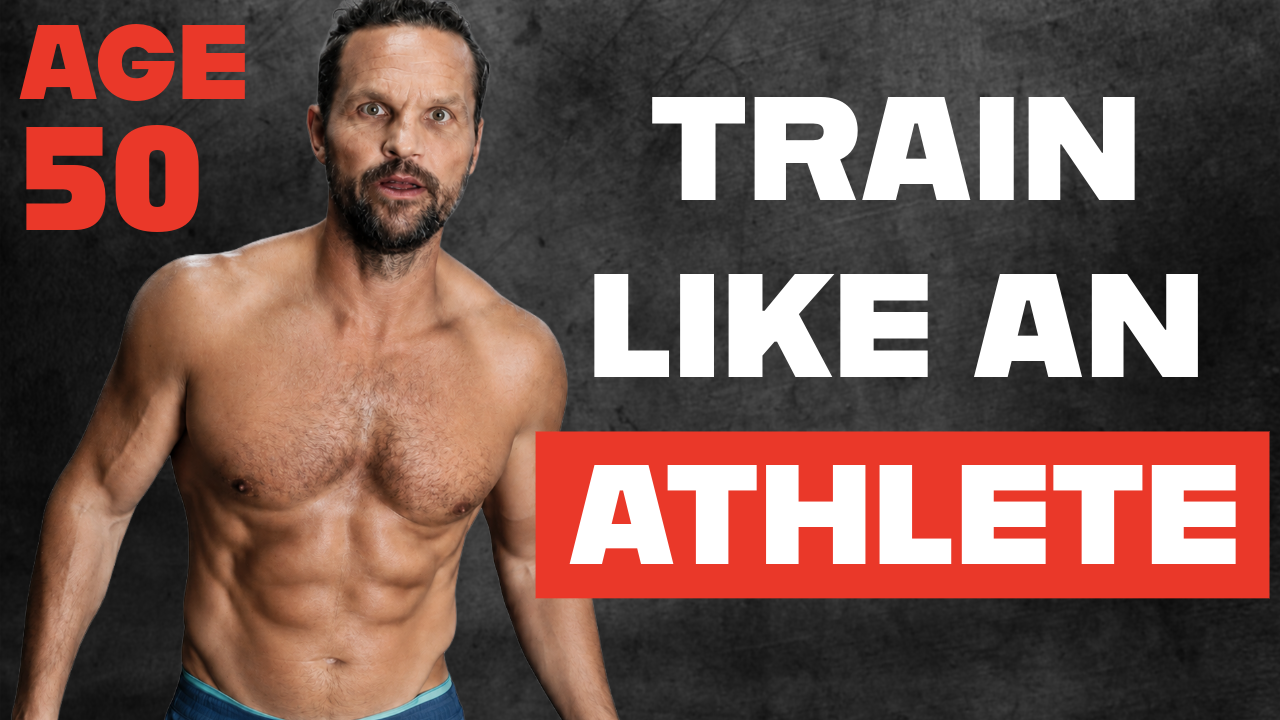
If you’ve spent years building strength but now want to become faster, more powerful and more athletic, this is how I’m approaching my own sprint training at 50.
My training looks different from the sprint sessions I might have performed when I was younger—and deliberately so.
I’m not trying to prove that I can still train like a 20-year-old. I’m trying to discover how intelligently I can train at 50 to maintain and improve the physical qualities that matter: speed, power, strength, mobility and resilience.
In the video below, I take you through an entire sprint-training session, from the initial movement preparation and running drills to controlled sprinting and the strength exercises that support it.
Why Sprint Training Changes as You Get Older
The purpose of sprint training isn’t simply to run as fast as possible every time you train.
A good session should develop speed while leaving you capable of recovering and training consistently. That becomes increasingly important as we get older.
I want to finish most sessions feeling as though I have trained productively—not as though I have survived them.
That means controlling the total volume, building intensity gradually and selecting exercises that have a clear role within the session.
This reflects the three stages of the Athletic Aging system:
-
PRIME: Prepare the body to move quickly.
-
PERFORM: Develop speed, power and strength.
-
PRESERVE: Manage the dose so you can recover, remain consistent and continue progressing.
1. Movement Preparation
My warm-up isn’t something I perform simply to raise my body temperature.
Everything in it should contribute to the session that follows.
Rather than automatically telling someone to jog or cycle for five minutes, I prefer movements that begin developing the rhythm, stiffness, coordination and posture required for running.
Skipping is a good example. It raises the temperature while also introducing the repeated contacts, upright posture and coordination we need during sprinting.
The rest of my preparation helps me assess how my body feels that day while gradually preparing my feet, ankles, hips and trunk for faster movement.
This is the PRIME stage of the session. The objective is to earn the right to move faster rather than rushing towards the most intense part of the workout.
2. Running Drills
Running drills create a bridge between general movement preparation and sprinting.
I don’t use drills merely because they look athletic. Each drill should help reinforce an aspect of sprinting, such as:
-
Posture
-
Rhythm
-
Coordination
-
Foot placement
-
Effective ground contacts
-
Movement through the hips
-
Coordination between the arms and legs
The drills also give me an opportunity to practise sprinting skills at a lower intensity before introducing greater speed.
No running drill perfectly recreates sprinting, but appropriately selected drills can help prepare the patterns and positions we want to use once the speed increases.
3. Sprint Preparation
Before beginning the main sprint efforts, I use a short period of sprint-specific preparation.
The goal is to raise intensity progressively instead of moving suddenly from drills into maximal running.
This is particularly important when returning to sprinting or when your body hasn’t experienced high-speed movement for many years.
Your first sprint of the day shouldn’t come as a surprise to your body.
Each build-up gives me information. Do my legs feel responsive? Is my movement coordinated? Am I becoming faster without forcing it?
If something doesn’t feel right, I can adjust the intensity or change the session. That isn’t wasted training—it is intelligent coaching.
4. Controlled Sprint Training
The sprinting in this session is controlled.
That doesn’t mean it is casual or ineffective. It means the volume and intensity are appropriate for what I want to achieve on that particular day.
There is a difference between running fast and straining to run fast.
I want to move with rhythm, coordination and intent. Once the quality begins to decline, simply adding more repetitions rarely improves the session.
For adults over 40, the aim shouldn’t be to copy the training volume of a younger competitive sprinter. The aim is to identify the smallest effective dose that helps maintain or improve speed without creating unnecessary fatigue.
Sprinting is a powerful stimulus. It deserves to be introduced gradually and treated with respect—but it shouldn’t automatically disappear from your training just because you are getting older.
5. High Box Squats
After sprinting, I move into high box squats.
This exercise supports the strength and force-producing qualities needed for acceleration without requiring me to perform an unnecessarily large volume of additional work.
The box also provides a consistent reference point for every repetition.
I’m not choosing this exercise because it looks impressive. I’m choosing it because it serves the physical quality I want to develop.
That principle should guide every exercise in a training programme:
What is this exercise helping me improve?
If there isn’t a good answer, the exercise may not deserve a place in the session.
6. Glute-Ham Raises
I finish the strength portion with glute-ham raises.
The hamstrings play an important role in sprinting, so they need to be prepared for the forces and speeds involved. Strengthening them through intelligently progressed exercises is therefore an important part of my wider training.
However, more is not always better.
The objective is to provide enough strength work to support sprint performance without adding so much fatigue that it compromises recovery or the quality of the next session.
A Productive Session Doesn’t Have to Exhaust You
One of the most important lessons from this session is that training quality shouldn’t be judged by exhaustion.
Athletes don’t choose exercises because they are impressive or because they make them tired. They choose them because those exercises serve a purpose.
At 50, I want my training to help me:
-
Run faster
-
Retain explosive power
-
Maintain useful strength
-
Move confidently
-
Recover well
-
Remain capable of training consistently
That requires ambition, but it also requires judgement.
I want to challenge my body enough to create adaptation while preserving my ability to return and train well again.
That is how we stop treating fitness after 50 as a battle against decline and start treating it as the continued development of athletic ability.
Could You Start Sprinting After 40 or 50?
Potentially—but you shouldn’t begin by simply walking onto a track and sprinting as hard as possible.
Your starting point depends on your training history, current strength, movement capacity, injury history and recent exposure to faster running.
Begin with preparation, develop the necessary movement skills and introduce speed progressively.
Sprinting is not necessarily the first step. It is a physical quality you prepare your body to perform.
Follow My Athletic Aging Journey
I’m documenting how I train at 50 while sharing the coaching principles behind each session.
If you want to remain strong, fast, powerful and athletic as you get older, join the Athletic Aging journey for practical guidance and updates.
JOIN THE ATHLETIC AGING JOURNEY
Train like an athlete. Age better.

The Athletic Aging Playbook
The fitness system that will give you freedom in later life
Recent Posts
